the falling star
鬼孩子
Great Tang cradles a boon from the misty mountains, and from the haunted heights thrusted into the great plains, came their reckoning.
the honourable
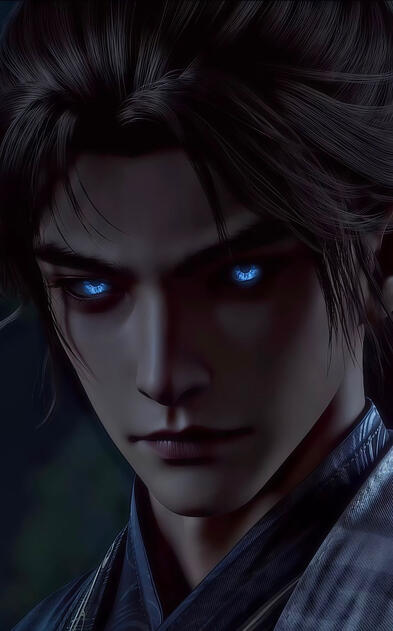
| Information | |
|---|---|
| Name | Li Liuxing, Gui Hai Zi. |
| Courtesy Name | Fengyang |
| Aliases | Ghost Flower King (Sunsetseg Khan) |
| Affiliation | Tang Dynasty (Former), Hui Hua Shan Sect |
| Rank | Vanguard General (参将)cānjiàng |
| Command | Fanged Gale Army |
Li Liuxing, (Chinese: 李流星), courtesy name Fengyang (
风殃), was a Chinese military general of the Tang Dynasty, and now lives as the Great Ancestor of the Hui Hua Shan Sect (Chinese: 灰花山派).He served as a Vanguard General, leading the defense of the western borders and security of The Silk Road with his Fanged Gale Army. He was known for his ruthless tactics and swift maneuvering, earning him the courtesy name of Fengyang, literally meaning 'Wind of Calamity'. He joined the Protectorate General to Pacify the West in 749 when Grand Protectorate General Gao Xianzhi was still in office, helping to quell the turbulent steppes of would be disrupters and securing the safety of the trade paths of The Silk Road.Liuxing was successful in acting as the mobile taskforce that enforced the Tarim Basin, assisting other commanders in defending the Four Garrisons and the territories that had submitted to the protectorate. However, when General An Lushan led his rebellion in 755, it caused the Tang Court to withdraw 200,000 soldiers back to Chang'an to defend the capital. Liuxing and his Fanged Gale Army remained in the Tarim Basin, and the burden of being the mobile taskforce of the protectorate weighed heavily on them.When the Tibetan Empire invaded the Hexi Corridor, communications were completely cut from the capital, but Liuxing and several other Generals managed to hold up on their own despite the repeated onslaughts.During these turbulent years in the Tarim Basin, Liuxing received word that a large convoy of caravans were caught in a sandstorm while trying to get to Yumen Pass, while at the same time being harassed by Uyghur and Tibetan forces. The Fanged Gale Army had suffered losses, and the soldiers themselves began to grow more weary as the years pass by. Earlier, Liuxing had sent a bulk of his men to assist Guo Xin and Li Yuanzhong with holding back raids from the Tibets, so with his remaining men, he led them towards the caravan convoy to help escort them towards Yumen Pass.Both Uyghur and Tibetan forces combined greatly outnumbered Liuxing's Fanged Gale Army, and the sandstorm only made it almost impossible to fend the convoy.Liuxing led his men into the fray, and utilizing his high-mobility horses and preemptive tactics, he was able to secure safe passage for the convoy. Liuxing and his men escorted the caravan convoy all the way towards Yumen Pass, and when received by Guo Xin, Liuxing fell off from his horse and died.Turns out there was poison seeping into the wounds sustained from battling Uyghur and Tibetan forces earlier, probably from their blades. He kept it to himself as he wanted to ensure his men are focused on the task of escorting the caravan on a long journey towards Yumen Pass.The Fanged Gale Army, now weary and old, escorted Liuxing's body through the treacherous Hexi Corridor, while another half remained in the Western Protectorate, continuing their duty as the mobile taskforce under the leadership of officers under Liuxing.Liuxing's body was safely sent back to Tang Lands, and his men built a mausoleum and buried his body at Hui Hua Shan.He was posthumously bestowed with the title 'Grand Minister of Xiyu', matriculating him to a first-rank military official from his third-rank status as a vanguard general.
Taken into the Royal Family
Before becoming apart of the Tang Dynasty's legacy, Liuxing's fate had always been with the Western Protectorate. He was found by a General leading a battalion of soldiers through the Hexi Corridor to assist with operations in the Western Protectorate. The General was Li Haixue, a member of the Li Family of the Great Tang originating from the Longxi Commandery. Haixue called the child Gui Hai Zi (Chinese:
鬼孩子), meaning Ghost Child for his pale and ghastly disposition.After a two year tenure at the Western Protectorate, Li Haixue's battalion finally returned to Chang'an. Along with the boy, Haixue decided to officially adopt him as his son, giving him the name Li Liuxing. Despite already learning martial arts due to having lived alongside soldiers, Liuxing was sent to study in the Imperial Academy to study alongside other nobles to ensure he would attain the skillsets and knowhow to survive in Great Tang as a member of the Li Family.He graduated amongst the top students, and he quickened to follow in his adoptive father's steps and became a military man, earning his way into becoming the Vanguard General. Upon attaining this position, he requested to be deployed to the Western Protectorate, feeling a deep affinity with the region especially when General Li Haixue found him in the Tarim Basin.
the fanged gale army
| Title | |
|---|---|
| Commander | Vanguard General(参将) Li Liuxing |
| Area | Protectorate General to Pacify the West |
| Infantry Type | Heavy & Light Calvary |
| Strength | 5000 Men (2500 Heavy Infantry, 1250 Light Infantry, 1250 Mounted Archers) |
The Fanged Gale Army was an initiative proposed by Vanguard General Li Liuxing, who saw the need to have a mobile vanguard force to maintain the dominion of Tang influence in the Western Regions. The army will act as an patrolling enforcer amongst the outposts, going wheresoever aid is needed.Heavy Calvary, Light Calvary, and Mounted Archers were the main composition of the formation.Recruits were only picked from other units and formations, needing to go through a selection trial called Blood Wind Trials (血风考核 xuèfēngkǎohé), which puts them through a six month process to vet who has the capacity the join the ranks of vanguard force. Soldiers are trained in guerilla tactics, foreign tactics, all-terrain combat, mounted combat, covert operations, fieldcraft, and virtually every weapon one could come across during a battle.They are one of the most formidable armies of the Imperial Tang Army, but eschewed from the records due to their secretive operations.
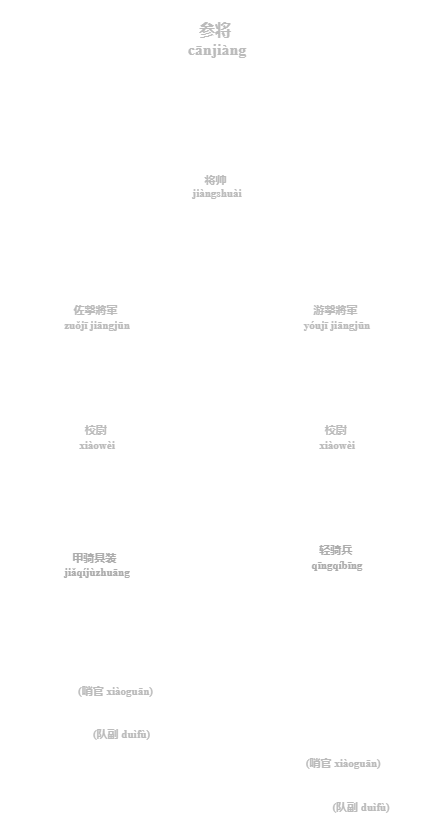
The structure of The Fanged Gale Army has Li Liuxing as the commanding officer, who is responsible for the daily operations of the entire formation. The command-chain reflects that of the vanguard's tactics, a left and right wing led by junior generals under him to sweep across the battlefield, decimating the enemies.The formation has autonomous authority, often acting on what is best instead of always ceding to commands from Chang'an.

demon god of gray flower mountain
After Liuxing was interred at his mausoleum within Gray Flower Mountain, his subordinates who escorted his body from the Western Region also built a shrine just at the base of the mountain, where people would congregate to pray in Liuxing's name. He was touted as a fierce protector, one who ensured the souls that travelled through the Silk Roads were safe under his watch. He was likened to Mahakala, a god and fierce protector of the Paths to Enlightenment.People such as former members of the Fanged Gale Army, relatives of soldiers, people who were sympathetic to the affairs of the Protectorate General to Pacify the West, or the great Tang Dynasty at large. People kept visiting the shrine, from the twilight years of the Tang Dynasty, through the Five Dynasties and Ten Kingdoms, and all the way to the Song Dynasty.Prayers accumulated after all these years, pangs of vengeance, yearns for the yesteryears, agonies of missing the lost. All of them presented through heart, mind, and soul in his name. Such fervent sentiments began drawing energy from everything else, amassing into the singularity that was the shrine where his body was interred.With people fervently praying and worshipping the Grand Minister of Xiyu, Liuxing's status has ascended beyond legend, deified by many for his valiant deeds. He was seen as a 'God of War, Travelers, and Fate'.One day during the rule of Emperor Duzong of Song, the skies over Gray Flower Mountain darkened, fogs began gathering in the woods that surrounded the mountain, and every plant and flower had their petals bleached pure white. The mountain then sundered itself open, towers of prismatic crimson light reached for the heavens, creating a haunting aurora that loomed above the mountain. A figure then rose from the blinding sea of red light, before vanishing as the light faded away, returning the mountain into the covers of the fog. During this period, the Mongol Invasion was already happening. They saw the light display from the Gray Flower Mountain. and dispatched multiple expedition parties to investigate, however to no avail as all attempts would fail to return to report their findings. In the subsequent attempts there would be survivors who made it back, and began spewing frantically about ghosts and demons, and a haunting white-haired figure who helmed the chaos. Rumors began to spread, and the white-haired figure was dubbed as Sunsetseg Khan, which means Ghost Flower King in mongolian.The Ghost Flower King was described to have the wrath of a vengeful god, brimming with unparalleled infernality as he washed the battlefield clean with tides of killing intent whenever they sought to approach the mountain.Amongst the pandemonium, people would have heard tell of the massacres at Gray Flower Mountain, and especially to those who still paid tribute to the shrine of the Grand Minister of Xiyu, believed that the Ghost Flower King was none other than Liuxing, now come back to life as the Vendetta of Great Tang, the demon god who will lead the souls of the damned and lost towards the paradise they so sought after for.
Passive Arts
Weapons Specialist
Trained by experts of an array of weapons during his time as a young master within the Tang Court, Liuxing was incredibly versatile with weapons, and has studied even ones originating from overseas.Vanguard and Guerilla Instincts
As the commander of a unit that specialized in vanguard and guerilla operations, Liuxing is greatly versed in tactics of both fields.Adept Swimmer
Liuxing was a strong swimmer, often going to the many rivers nearby Chang'an when he was young to train, swimming against the currents to foster greater stamina and endurance.
martial arts / techniques
Pariah Bodhitsattva
Despite not having subscribed to a particular religion, Liuxing was partial to the teachings of Buddhism. He ultimately practices detachment, and often believed that through exile can he practice this notion. He would enter voluntary seclusion to train, detaching himself from the material. This undoes the limits set by ones mind, body, and soul. His mind would become the universe, his soul the heart of a great star, and body an insurmountable fortress. Such fortitude and strength played a big part for him in the battlefield.
Work in Progress.Bloodletting Blade Technique
Work in Progress.Forlorn Spear Technique
Work in Progress.The Hanging Moon
Like the moon, he hangs above all. And from above, he lays waste to all beneath him. A sigil forms behind him, radiating in pure white as he commands the tides of the the battle with a simple wave of his hand. He could summon crystals to violently protrude from the ground, fire beams of energy, unleash a barrage of missiles, and command shards of the moon to do his bidding.
Work in Progress.Laments of Tang
Work in Progress.Liturgy of Shapes
Work in Progress.Ghost Flower Aria
Work in Progress.The Falling Star
Work In Progress.